Interleukin-6 May Be Associated with Mitochondrial Dysfunction Through Signal Transducer and Activator of Transcription-3 in Patients with Type 2 Diabetes Mellitus
DOI:
https://doi.org/10.23851/mjs.v37i3.1920Keywords:
T2DM, Mitochondria, STAT3, IL-6, HyperglycemiaAbstract
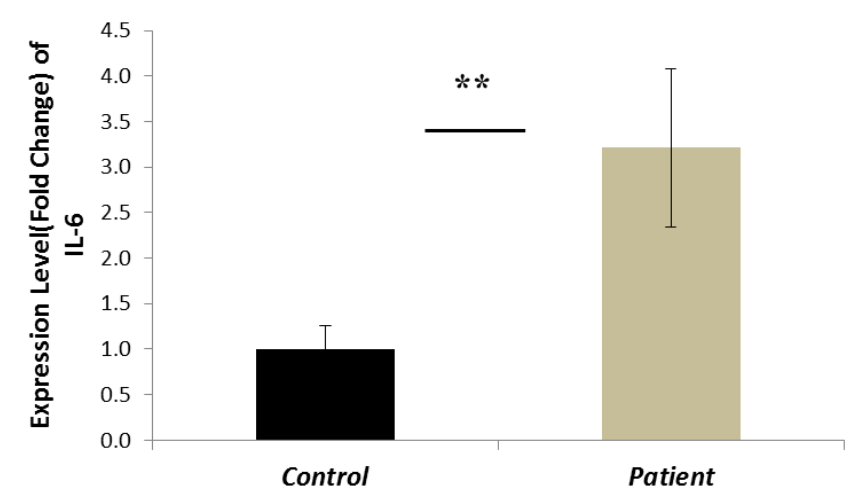
Background: Diabetes mellitus is one of the most prevalent chronic diseases associated with metabolic disorders, characterized by hyperglycemia, which promotes inflammation and cell signaling (e.g., interleukin-6, a cytokine involved in cellular signal transduction pathways) and suppresses mitochondrial function through regulation of signal transducer and activator of transcription-3 (STAT3) levels. The development and progression of diabetic complications are strongly influenced by cellular inflammation, making it a promising therapeutic target for managing diabetes-related complications. Objective: The aim of this study is to compare the expression of Signal Transducer and Activator of Transcription 3 and Interleukin 6 between type 2 diabetics and normal healthy controls to determine the role of the pro-inflammatory cytokine Interleukin 6 in the activation of STAT3 associated with mitochondrial dysfunction and their potential as biomarkers of metabolic dysregulation in diabetes. Methods: We studied 40 patients with type 2 diabetes and 40 healthy controls. Whole blood was collected in EDTA tubes, and the expression levels of interleukin-6 and STAT3 were analyzed by real-time quantitative PCR. Results: Patients with type 2 diabetes had increased levels of interleukin-6 and STAT3 compared with controls. However, there was no statistically significant effect of diabetes on STAT3 expression after adjustment for gender and body mass index. Expression of interleukin-6 was significantly positively correlated with STAT3. Conclusions: The level of interleukin-6 was significantly increased in type 2 diabetes compared to controls and remained significant after adjusting for body mass index and gender, indicating its potential utility as a biomarker for type 2 diabetes. Conversely, the increased STAT3 expression became statistically insignificant after adjustment, indicating that STAT3 expression is not an independent biomarker for diabetes. The significant correlation of interleukin-6 and STAT3 may indicate that they play a role in the pathophysiology of type 2 diabetes.
Downloads
References
S. C. Naaman and G. L. Bakris, "Diabetic nephropathy: update on pillars of therapy slowing progression," Diabetes Care, vol. 46, no. 9, pp. 1574–1586, 2023.
T. V. Rohm, D. T. Meier, J. M. Olefsky, and M. Y. Donath, "Inflammation in obesity, diabetes, and related disorders," Immunity, vol. 55, no. 1, pp. p31–55, 2022.
K.-A. Cojocaru, I. Luchian, A. Goriuc, L.-M. Antoci, C.-G. Ciobanu, R. Popescu, C.-E. Vlad, M. Blaj, and L. G. Foia, "Mitochondrial dysfunction, oxidative stress, and therapeutic strategies in diabetes, obesity, and cardiovascular disease," Antioxidants, vol. 12, no. 3, Art no. 658, 2023.
S. Rovira-Llopis, C. Bañuls, N. Diaz-Morales, A. Hernandez-Mijares, M. Rocha, and V. M. Victor, "Mitochondrial dynamics in type 2 diabetes: Pathophysiological implications," Redox Biology, vol. 11, pp. 637–645, Apr. 2017.
H. Yaribeygi, T. Sathyapalan, S. L. Atkin, and A. Sahebkar, “Molecular mechanisms linking oxidative stress and diabetes mellitus,” Oxidative Medicine and Cellular Longevity, vol. 2020, no. 1, Art no. 8609213, Mar. 2020.
M. Akbari and V. Hassan-Zadeh, "IL-6 signalling pathways and the development of type 2 diabetes," Inflammopharmacology, vol. 26, no. 3, pp. 685–698, Mar. 2018.
L. H. Calabrese and S. Rose-John, “IL-6 biology: Implications for clinical targeting in rheumatic disease,” Nature Reviews Rheumatology, vol. 10, no. 12, pp. 720–727, Aug. 2014.
J. Taneera, A. Khalique, A. K. Mohammed, B. M. Mussa, N. Sulaiman, E. Abu-Gharbieh, W. El-Huneidi, and M. M. Saber-Ayad, "Investigating the impact of IL6 on insulin secretion: evidence from INS-1 cells, human pancreatic islets, and serum analysis," Cells, vol. 13, no. 8, Art no. 685, 2024.
E. G. Lee, L. R. Luckett-Chastain, K. N. Calhoun, B. Frempah, A. Bastian, and R. M. Gallucci, “Interleukin 6 function in the skin and isolated keratinocytes is modulated by hyperglycemia,” Journal of Immunology Research, vol. 2019, no. 1, Art no. 5087847, Apr. 2019.
C. Zhang, S. Hu, C. Yin, G. Wang, and P. Liu, "STAT3 orchestrates immune dynamics in hepatocellular carcinoma: A pivotal nexus in tumor progression," Critical Reviews in Oncology/Hematology, vol. 207, Art no. 104620, Mar. 2025.
B. Huang, X. Lang, and X. Li, “The role of IL-6/JAK2/STAT3 signaling pathway in cancers,” Frontiers in Oncology, vol. 12, Art no. 1023177, Dec. 2022.
J. Xu, M. Wakai, K. Xiong, Y. Yang, A. Prabakaran, S. Wu, D. Ahrens, M. d. P. Molina-Portela, M. Ni, Y. Bai, et al., "The pro-inflammatory cytokine IL6 suppresses mitochondrial function via the gp130-JAK1/STAT1/3 HIF1α/ERRα axis," Cell Reports, vol. 44, no. 3, Art no. 115403, 2025.
E. Carbognin, R. M. Betto, M. E. Soriano, A. G. Smith, and G. Martello, "STAT3 promotes mitochondrial transcription and oxidative respiration during maintenance and induction of naive pluripotency," The EMBO Journal, vol. 35, no. 6, pp. 618–634, 2016.
S. Comità, S. Femmino, C. Thairi, G. Alloatti, K. Boengler, P. Pagliaro, and C. Penna, “Regulation of STAT3 and its role in cardioprotection by conditioning: Focus on non-genomic roles targeting mitochondrial function,” Basic Research in Cardiology, vol. 116, no. 1, Art no. 56, 2021.
I. J. Marié, T. Lahiri, Ö. Önder, K. S. Elenitoba-Johnson, and D. E. Levy, "Structural determinants of mitochondrial STAT3 targeting and function," Mitochondrial Communications, vol. 2, pp. 1–13, 2024.
K. J. Livak and T. D. Schmittgen, "Analysis of relative gene expression data using real-time quantitative PCR and the 2−∆∆CT method," Methods, vol. 25, no. 4, pp. 402–408, 2001.
Y. Wang, J. Wang, S.-Y. Tao, Z. Liang, R. Xie, N.-n. Liu, R. Deng, Y. Zhang, D. Deng, and G. Jiang, “Mitochondrial damage‐associated molecular patterns: a new insight into metabolic inflammation in type 2 diabetes mellitus,” Diabetes/Metabolism Research and Reviews, vol. 40, no. 2, Art no. e3733, 2023.
J. Escalera, L. Pérez, S. Brito, M. Lares, L. Flores, and J. Castro, "Serum levels of interleukin-6 in patients with type 2 diabetes and its correlation with the lipid profile," Revista Digital de Postgrado, vol. 10, no. 2, 2021.
J. Lee, J.-S. Park, and Y. S. Roh, "Molecular insights into the role of mitochondria in non-alcoholic fatty liver disease," Archives of Pharmacal Research, vol. 42, no. 11, pp. 935–946, 2019.
A. Agarwal, A. Hegde, C. Yadav, A. Ahmad, P. A. Manjrekar, and R. M. Srikantiah, "Association of interleukin 6 and myeloperoxidase with insulin resistance in impaired fasting glucose subjects," Indian Journal of Clinical Biochemistry, vol. 32, no. 1, pp. 33–38, 2016.
N. N. Al-azzawi, M. K. Hussein, and M. I. Khalaf, "Verifying the association between IL6-174G/C polymorphism in type 2 diabetes mellitus," Journal Port Science Research, vol. 7, no. 1, pp. 36–42, 2024.
J. M. Hoffman, R. Robinson, G. Greenway, J. Glass, S. Budkin, and S. Sharma, "Blockade of interleukin-6 trans-signaling prevents mitochondrial dysfunction and cellular senescence in retinal endothelial cells," Experimental Eye Research, vol. 237, Art no. 109721, Dec. 2023.
M. Wegner, A. Araszkiewicz, M. Piorunska-Stolzmann, B. Wierusz-Wysocka, and D. Zozulinska-Ziolkiewicz, "Association between IL-6 concentration and diabetes-related variables in DM1 patients with and without microvascular complications," Inflammation, vol. 36, no. 3, pp. 723–728, 2013.
S. Liqiang, L. Fang-Hui, Q. Minghui, and C. Haichun, "Threshold effect and sex characteristics of the relationship between chronic inflammation and BMI," BMC Endocrine Disorders, vol. 23, no. 1, Art no. 175, 2023.
J. Cohen, "A power primer," Psychological Bulletin, vol. 112, no. 1, pp. 155–159, 1992.
H. Islam, G. S. Jackson, J. Boultbee, S.-H. Tsai, A. Moreno-Cabañas, A. A. d. S. Teixeira, D. C. Wright, A. L. Mui, and J. P. Little, "Interleukin-10 resistance in type 2 diabetes is associated with defective STAT3 signaling in human blood leukocytes," American Journal of Physiology-Cell Physiology, vol. 328, no. 4, pp. C1293–C1302, 2025.
X. Chen, X. Tao, M. Wang, R. D. Cannon, B. Chen, X. Yu, H. Qi, R. Saffery, P. N. Baker, X. Zhou, et al., "Circulating extracellular vesicle-derived miR-1299 disrupts hepatic glucose homeostasis by targeting the STAT3/FAM3A axis in gestational diabetes mellitus," Journal of Nanobiotechnology, vol. 22, no. 1, Art no. 509, 2024.
P. Millot, L. Duquesne, C. San, B. Porte, C. Pujol, B. Hosten, J. Hugon, C. Paquet, and F. Mouton-Liger, "Non-canonical STAT3 pathway induces alterations of mitochondrial dynamic proteins in the hippocampus of an LPS-induced murine neuroinflammation model," Neurochemistry International, vol. 186, Art no. 105979, Jun. 2025.
H. Li, L. Xu, and H. Song, "MiR-29a alleviates high glucose-induced inflammation and mitochondrial dysfunction via modulation of IL-6/STAT3 in diabetic cataracts," Current Eye Research, vol. 46, no. 9, pp. 1325–1332, 2021.
S. Huo, M. Wang, M. Du, B. Ren, T. Yang, L. Peng, Y. Jiang, D. Peng, L. Men, W. Shi, et al., "Macrophage-derived S100A9 promotes diabetic cardiomyopathy by disturbing mitochondrial quality control via STAT3 activation," International Journal of Biological Sciences, vol. 21, no. 7, pp. 3061–3080, 2025.
D. Peng, X. He, B. Ren, Q. Wang, L. Peng, Y. Jiang, S. Huo, L. Men, W. Shi, P. Luo, et al., "JAK2/STAT3/HMGCS2 signaling aggravates mitochondrial dysfunction and oxidative stress in hyperuricemia-induced cardiac dysfunction," Molecular Medicine, vol. 31, no. 1, Art no. 184, 2025.
Y. Liu, M. Zhang, L. Zeng, Y. Lai, S. Wu, and X. Su, "Wogonin upregulates SOCS3 to alleviate the injury in diabetic nephropathy by inhibiting TLR4-mediated JAK/STAT/AIM2 signaling pathway," Molecular Medicine, vol. 30, no. 1, Art no. 78, 2024.
S. Rose-John, B. J. Jenkins, C. Garbers, J. M. Moll, and J. Scheller, "Targeting IL-6 trans-signalling: Past, present and future prospects," Nature Reviews Immunology, vol. 23, no. 10, pp. 666–681, 2023.
J.-H. Yun, D.-H. Lee, H.-S. Jeong, S.-H. Kim, S.-K. Ye, and C.-H. Cho, "STAT3 activation in microglia increases pericyte apoptosis in diabetic retinas through TNF-α/AKT/p70S6 kinase signaling," Biochemical and Biophysical Research Communications, vol. 613, pp. 133–139, Jul. 2022.
Downloads
Key Dates
Received
Revised
Accepted
Published
Data Availability Statement
All data generated or analyzed during this study are included in this published article.
Issue
Section
License
Copyright (c) 2026 Azhar A. Ameen

This work is licensed under a Creative Commons Attribution 4.0 International License.
(Starting May 5, 2024) Authors retain copyright and grant the journal right of first publication with the work simultaneously licensed under a Creative Commons Attribution (CC-BY) 4.0 License that allows others to share the work with an acknowledgement of the work’s authorship and initial publication in this journal.
How to Cite