Bacterial Isolates from Wound and Burn Infections in Three Iraqi Provinces (Baghdad, Sulaymaniyah and Misan): A Review of Epidemiology, Pathogenesis and Antimicrobial Resistance
DOI:
https://doi.org/10.23851/mjs.v37i2.1853Keywords:
Pseudomonas aeruginosa, Staphylococcus aureus, Nosocomial infection, Biofilm, Virulence factorsAbstract
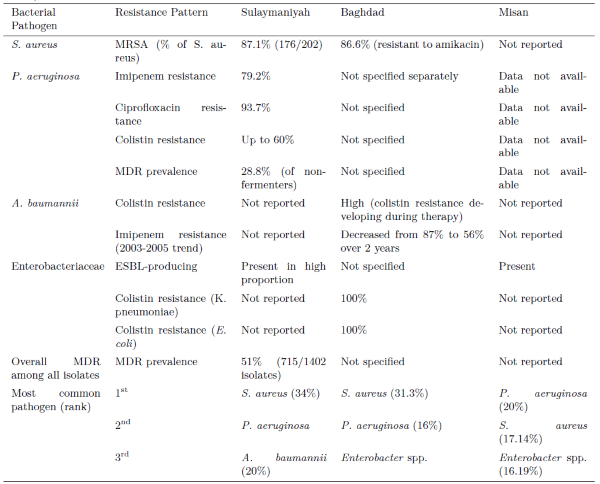
Background: Burn and wound infections represent a significant public health burden in Iraq, contributing to high rates of morbidity and mortality. Decades of armed conflict, economic instability and deteriorating healthcare infrastructure have severely compromised the capacity of Iraqi hospitals to prevent and manage these infections effectively. Objective: This comprehensive review consolidates scientific literature to evaluate the epidemiology, antimicrobial resistance patterns, pathogenic mechanisms and clinical outcomes associated with bacterial wound and burn infections across Iraqi hospitals and healthcare systems. Methods: A systematic search identified studies on bacterial isolates from wound and burn infections across Iraqi hospitals, with data drawn primarily from Sulaymaniyah, Baghdad and Misan provinces as geographically and demographically representative samples rather than a comprehensive national survey. Results: Pseudomonas aeruginosa, Staphylococcus aureus and Acinetobacter baumannii collectively account for the majority of wound and burn infections. Multidrug-resistant (MDR) pathogens are highly prevalent, including MRSA rates approaching 87%, ESBL-producing Enterobacteriaceae and carbapenem-resistant Gram-negative organisms. Nosocomial transmission is the predominant route of spread, driven by overcrowding, poor infection control and contaminated environments. Burn patient mortality ranges from 13–28%, with sepsis responsible for 44–65% of burn-related deaths. Virulence factors, biofilm formation and bacterial adaptation to wound environments contribute to treatment failure and infection persistence. Conclusions: Urgent improvements are required in antibiotic stewardship, infection prevention, epidemiologic surveillance and evidence-based treatment protocols across Iraqi healthcare facilities. Inter-hospital collaboration and investment in regional microbiological diagnostic capacity are essential to addressing this growing public health crisis.
Downloads
References
N. Lee, Y. Bae, S. Jang, D. W. Lee, and S. W. Lee, “Global, regional, and national burden of burn injury by total body surface area (TBSA) involvement from 1990 to 2021, with projections of prevalence to 2050,” Healthcare, vol. 13, no. 16, Art no. 2077, 2025.
CrossRef | Google Scholar | PubMed DOI: https://doi.org/10.3390/healthcare13162077
K. C. Jordan, J. L. Di Gennaro, A. von Saint André-von Arnim, and B. T. Stewart, “Global trends in pediatric burn injuries and care capacity from the World Health Organization Global Burn Registry,” Frontiers in Pediatrics, vol. 10, Art no. 954995, Jul. 2022.
CrossRef | Google Scholar | PubMed DOI: https://doi.org/10.3389/fped.2022.954995
Y. Zhang, Q. Chen, R. Wang, L. Guo, P. Li, K. Deng, H. Xiao, and X. Xu, “Global trends in thermal burn burden, 1990–2021: A comprehensive analysis for the global burden of disease study 2021,” Frontiers in Public Health Injury Prevention and Control, vol. 13, Art no. 1631138, Jul. 2025.
CrossRef | Google Scholar | PubMed DOI: https://doi.org/10.3389/fpubh.2025.1631138
M. H. Al-Azzawi and E. J. A. Alkalifawi, “Detection of bacteria causing burn infection isolated from several hospitals in Baghdad,” Ibn Al-Haitham Journal for Pure and Applied Sciences, vol. 36, no. 3, pp. 1–8, 2023.
CrossRef | Google Scholar DOI: https://doi.org/10.30526/36.3.3090
J. J. Kadhim, “Exploring Iraqi nurses’ knowledge toward infection control in burning center,” Journal of Medical Genetics and Clinical Biology, vol. 2, no. 10, pp. 446–459, 2025.
CrossRef | Google Scholar DOI: https://doi.org/10.61796/jmgcb.v2i10.1420
F. H. Lami and R. K. Al Naser, “Epidemiological characteristics of burn injuries in Iraq: A burn hospital-based study,” Burns, vol. 45, no. 2, pp. 479–483, 2019.
CrossRef | Google Scholar | PubMed DOI: https://doi.org/10.1016/j.burns.2018.03.005
A. Aljanaby and I. Aljanaby, “Prevalence of aerobic pathogenic bacteria isolated from patients with burn infection and their antimicrobial susceptibility patterns in Al-Najaf City, Iraq – a three-year cross-sectional study,” F1000Research, vol. 7, Art no. 1157, Jul. 2018.
CrossRef | Google Scholar DOI: https://doi.org/10.12688/f1000research.15088.1
R. M. Veronica, E. J. Nelwan, J. Kumalawati, C. M. Rumende, K. Chen, M. Simadibrata, H. Shatri, and E. Yunir, “The effect of multidrug-resistant organism infection on mortality of burn patients at RSUPN Dr. Cipto Mangunkusumo,” Annals of Burns and Fire Disasters, vol. 37, no. 2, pp. 159–168, 2024.
Google Scholar | PubMed
A. A. Gatea, S. M. Niazi, R. Pakzad, M. Mohammadi, and M. A. Abdullah, “Epidemiological, demographic and outcomes of burns among females at reproductive age in Baghdad/Iraq,” International Journal of Burns and Trauma, vol. 9, no. 2, pp. 41–48, 2019.
Google Scholar | Link | PubMed
S. Maharjan, S. Shrestha, U. Acharya, K. Nakarmi, S. Shrestha, N. Maharjan, and S. Shrestha, “Prevalence and determinants of multi-drug resistance bacterial infection among burn patients in a tertiary care center in Nepal,” Infection and Drug Resistance, vol. 19, pp. 1–18, Jan. 2026.
CrossRef | Google Scholar | PubMed DOI: https://doi.org/10.2147/IDR.S559803
Y. A. Almutawif and N. U. Khan, “Gut microbiome dysbiosis and antimicrobial resistance in the Middle East: A converging public health crisis in conflict and fragile settings,” Archives of Microbiology, vol. 208, no. 1, Art no. 15, 2025.
CrossRef | Google Scholar | PubMed DOI: https://doi.org/10.1007/s00203-025-04574-y
Z. Qadrie, H. Ashraf, M. A. Dar, and A. Qadir, “The growing threat of antibiotic resistance: Mechanisms, causes, consequences, and solutions,” International Journal of Cognitive Neuroscience and Psychology, vol. 3, no. 3, pp. 28–36, 2025.
Google Scholar | Link
E. G. Karam, M. El-Jamal, R. Osman, S. Toukan, G. I. Mouawad, and J. Al Barathie, “The aftermath of multiple trauma on a nation: Unraveling Lebanon’s unique mental health struggle,” Frontiers in Psychiatry, vol. 15, Art no. 1444245, Jan. 2025.
CrossRef | Google Scholar | PubMed DOI: https://doi.org/10.3389/fpsyt.2024.1444245
K. I. Mohammed Saber, D. M. Abdulah, N. S. Murad, and Z. R. Mustafa, “Epidemiologic and clinical characteristics and outcomes of burn patients in Kurdistan Region: A one-decade large retrospective cross-sectional study,” Healthcare in Low-resource Settings, vol. 12, no. 2, Art no. 12187, 2024.
CrossRef | Google Scholar DOI: https://doi.org/10.4081/hls.2024.12187
M. Al-Shamsi and N. Othman, “The epidemiology of burns in Basra, Iraq,” Annals of Burns and Fire Disasters, vol. 30, no. 3, pp. 167–171, 2017.
Google Scholar | Link
E. M. Obaid and H. A. Baiee, “Epidemiological and clinical characteristics of burn injuries among hospitalized patients in Babylon province,” Medical Journal of Babylon, vol. 19, no. 1, pp. 9–14, 2022.
CrossRef | Google Scholar DOI: https://doi.org/10.4103/MJBL.MJBL_70_20
C. M. Musee, L. N. Kahoro, R. A. Onono, and R. N. Ngure, “Mapping the risks: A GIS-based study of factors associated with paediatric burn admissions in a Kenyan referral hospital,” Journal of Public Health Studies, vol. 4, no. 1, pp. 69–89, 2025.
CrossRef | Google Scholar DOI: https://doi.org/10.58425/jphs.v4i1.381
S. V, M. Bijay, and A. K. Mishra, “Study of psychosocial aspects of suicidal burns patients,” Journal of Psychiatry, vol. 24, no. 9, Art no. 494, 2021.
Link
A. Alhadlaq, M. Alfawzan, M. Alsaif, L. S. Alhumaidan, N. A. Aljahili, B. H. Alharbi, and E. M. Al Hadi, “Prevalence, pattern, and long-term outcome of facial burns among Riyadh city population: A 10-year study,” Journal of Burn Care & Research, vol. 46, no. 4, pp. 794–800, 2025.
CrossRef | Google Scholar | PubMed DOI: https://doi.org/10.1093/jbcr/iraf018
D. Mulatu, A. Zewdie, B. Zemede, B. Terefe, and B. Liyew, “Outcome of burn injury and associated factor among patient visited at Addis Ababa Burn, Emergency and Trauma Hospital: A two years hospital-based cross-sectional study,” BMC Emergency Medicine, vol. 22, no. 1, 2022.
CrossRef | Google Scholar | PubMed DOI: https://doi.org/10.1186/s12873-022-00758-7
H. Walker and E. Chipp, “Short and long term mortality following massive burn injury (>50% TBSA) in a UK burns centre,” Burns, vol. 48, no. 8, pp. 1845–1849, 2022.
CrossRef | Google Scholar | PubMed DOI: https://doi.org/10.1016/j.burns.2022.02.006
M. S. Younis and R. Khudhiar Lafta, “The plight of women in Iraq: Gender disparity, violence, and mental health,” International Journal of Social Psychiatry, vol. 67, no. 8, pp. 977–983, 2021.
CrossRef | Google Scholar | PubMed DOI: https://doi.org/10.1177/00207640211003602
M. A. Al-Ameen and A. M. Ghareeb, “Prevalence of colistin resistance in Pseudomonas aeruginosa isolated from burn patients in Sulaymaniyah city,” Iraqi Journal of Biotechnology, vol. 21, no. 2, pp. 713–722, 2022.
Google Scholar | Link
I. M. Subhi, S. N. Abdulghaffar, and K. A. Khraibet, “Association of nosocomial burns and bacterial colonization in Iraqi patients,” European Journal of Theoretical and Applied Sciences, vol. 2, no. 4, pp. 679–686, 2024.
CrossRef | Google Scholar DOI: https://doi.org/10.59324/ejtas.2024.2(4).57
J. F. Borgio, A. S. Rasdan, B. Sonbol, G. Alhamid, N. B. Almandil, and S. AbdulAzeez, “Emerging status of multidrug-resistant bacteria and fungi in the Arabian Peninsula,” Biology, vol. 10, no. 11, Art no. 1144, 2021.
CrossRef | Google Scholar | PubMed DOI: https://doi.org/10.3390/biology10111144
J. A. Ghafil and M. T. Flieh, “Isolation and identification of bacterial burn wound infection in Iraqi patient,” Indian Journal of Forensic Medicine & Toxicology, vol. 15, no. 4, pp. 1351–1357, 2021.
CrossRef | Google Scholar DOI: https://doi.org/10.37506/ijfmt.v15i4.16897
D. Church, S. Elsayed, O. Reid, B. Winston, and R. Lindsay, “Burn wound infections,” Clinical Microbiology Reviews, vol. 19, no. 2, pp. 403–434, 2006.
CrossRef | Google Scholar | PubMed DOI: https://doi.org/10.1128/CMR.19.2.403-434.2006
M. T. El-Saadony, A. M. Saad, D. M. Mohammed, S. A. Korma, M. Y. Alshahrani, A. E. Ahmed, E. H. Ibrahim, H. M. Salem, S. S. Alkafaas, A. M. Saif, et al., “Medicinal plants: Bioactive compounds, biological activities, combating multidrug-resistant microorganisms, and human health benefits – a comprehensive review,” Frontiers in Immunology, vol. 16, Apr. 2025.
CrossRef | Google Scholar | PubMed DOI: https://doi.org/10.3389/fimmu.2025.1491777
J. P. Benitez, M. Zuluaga, J. P. Trochez, Á. A. Á. D. F. Penagos, E. Briceño, and S. Zuluaga, “Burn wound infections: A 35-year review of advances, diagnostic challenges, and evidence-based strategies,” Revista Brasileira de Cirurgia Plástica (RBCP) – Brazilian Journal of Plastic Surgery, vol. 40, Art no. s00451809394, 2025.
CrossRef | Google Scholar DOI: https://doi.org/10.1055/s-0045-1809394
S. Qin, W. Xiao, C. Zhou, Q. Pu, X. Deng, L. Lan, H. Liang, X. Song, and M. Wu, “Pseudomonas aeruginosa: Pathogenesis, virulence factors, antibiotic resistance, interaction with host, technology advances and emerging therapeutics,” Signal Transduction and Targeted Therapy, vol. 7, no. 1, Art no. 199, 2022.
CrossRef | Google Scholar | PubMed DOI: https://doi.org/10.1038/s41392-022-01056-1
M. Letizia, S. P. Diggle, and M. Whiteley, “Pseudomonas aeruginosa: Ecology, evolution, pathogenesis and antimicrobial susceptibility,” Nature Reviews Microbiology, vol. 23, no. 11, pp. 701–717, 2025.
CrossRef | Google Scholar | PubMed DOI: https://doi.org/10.1038/s41579-025-01193-8
S. M. Mondol, M. R. Islam, M. E. Mia, M. H. Hassan, F. Farhad, K. Akter, S. K. Shakil, I. Islam, N. N. Rakhi, J. F. Mustary, et al., “Molecular and genomic insights into multidrug-resistant (MDR) and extensively drug-resistant (XDR) Pseudomonas aeruginosa causing burn wound infections in Bangladesh,” Scientific Reports, vol. 15, no. 1, Art no. 25445, 2025.
CrossRef | Google Scholar | PubMed DOI: https://doi.org/10.1038/s41598-025-11614-6
R. M. Al-Groom, O. H. Alkofahi, S. A. M. Saghir, A. Da’meh, A. M. Almanaseer, W. Alraei, D. Abu Al-Haijaa, S. Z. Burjaq, L. Alswalha, F. Alhawarat, et al., “Prevalence of multidrug-resistant Acinetobacter baumannii and it's molecular characterization in hospitalized patients in a governmental hospital in Irbid, Jordan,” Preprints, 2025.
CrossRef | Google Scholar DOI: https://doi.org/10.20944/preprints202501.1332.v2
F. Imperi, L. C. Antunes, J. Blom, L. Villa, M. Iacono, P. Visca, and A. Carattoli, “The genomics of Acinetobacter baumannii: Insights into genome plasticity, antimicrobial resistance and pathogenicity,” IUBMB Life, vol. 63, no. 12, pp. 1068–1074, 2011.
CrossRef | Google Scholar | PubMed DOI: https://doi.org/10.1002/iub.531
A. R. Freitas and G. Werner, “Nosocomial pathogens and antimicrobial resistance: Modern challenges and future opportunities,” Microorganisms, vol. 11, no. 7, Art no. 1685, 2023.
CrossRef | Google Scholar | PubMed DOI: https://doi.org/10.3390/microorganisms11071685
N. Thanoon and K. A. Mohammed, “Bloodstream infections and antibiotic resistance patterns in patients at major hospitals in Basra, Iraq (2021–2024),” Romanian Journal of Infectious Diseases, vol. 28, no. 1, pp. 42–50, 2025.
CrossRef | Google Scholar DOI: https://doi.org/10.37897/RJID.2025.1.6
K. J. Kearney, R. A. Ariëns, and F. L. Macrae, “The role of fibrin(ogen) in wound healing and infection control,” Seminars in Thrombosis and Hemostasis, vol. 48, no. 2, pp. 174–187, 2021.
CrossRef | Google Scholar | PubMed DOI: https://doi.org/10.1055/s-0041-1732467
S. Di Bella, B. Marini, G. Stroffolini, N. Geremia, D. R. Giacobbe, F. Campanile, M. Bartoletti, G. Alloisio, L. Di Risio, G. Viglietti, et al., “The virulence toolkit of Staphylococcus aureus: A comprehensive review of toxin diversity, molecular mechanisms, and clinical implications,” European Journal of Clinical Microbiology & Infectious Diseases, vol. 44, no. 8, pp. 1797–1816, 2025.
CrossRef | Google Scholar | PubMed DOI: https://doi.org/10.1007/s10096-025-05148-y
N. Hussein, A. Muhammad, and H. Abozait, “Antibiotic resistance in Klebsiella pneumoniae in Iraq: A narrative review,” Journal of Life and Bio Sciences Research, vol. 6, no. 2, pp. 64–69, 2025.
CrossRef | Google Scholar DOI: https://doi.org/10.38094/jlbsr602162
S. Ghasemian, M. Karami-Zarandi, H. Heidari, S. Khoshnood, E. Kouhsari, S. Ghafourian, A. Maleki, and H. Kazemian, “Molecular characterizations of antibiotic resistance, biofilm formation, and virulence determinants of Pseudomonas aeruginosa isolated from burn wound infection,” Journal of Clinical Laboratory Analysis, vol. 37, no. 4, Art no. e24850, 2023.
CrossRef | Google Scholar | PubMed DOI: https://doi.org/10.1002/jcla.24850
J. P. Hays, K. S. Safain, M. S. Almogbel, I. Habib, and M. A. Khan, “Extended spectrum- and carbapenemase based β-lactam resistance in the Arabian Peninsula – a descriptive review of recent years,” Antibiotics, vol. 11, no. 10, Art no. 1354, 2022.
CrossRef | Google Scholar | PubMed DOI: https://doi.org/10.3390/antibiotics11101354
L. G. Kavanaugh, M. E. Hinrichsen, C. M. Dunham, and G. L. Conn, “Regulation, structure, and activity of the Pseudomonas aeruginosa mexXY efflux system,” Antimicrobial Agents and Chemotherapy, vol. 69, no. 5, Art no. e01825-24, 2025.
CrossRef | Google Scholar | PubMed DOI: https://doi.org/10.1128/aac.01825-24
K. S. Rizi, S. A. Jamehdar, M. S. Sasan, K. Ghazvini, E. Aryan, H. Safdari, and H. Farsiani, “Detection of extended-spectrum beta-lactamases and carbapenemases in clinical isolates of Stenotrophomonas maltophilia in the northeast of Iran,” Gene Reports, vol. 34, Art no. 101857, Mar. 2024.
CrossRef | Google Scholar DOI: https://doi.org/10.1016/j.genrep.2023.101857
D. A. Abbas, M. T. Al-Ouqaili, and M. J. Alfeehan, “Molecular and bacteriological characterization of colistin and carbapenem-resistant nosocomial isolates of Acinetobacter baumannii isolated from different Iraqi hospitals,” Journal of Infection and Public Health, vol. 19, no. 3, Art no. 103118, 2026.
CrossRef | Google Scholar | PubMed DOI: https://doi.org/10.1016/j.jiph.2025.103118
J. Lee and L. Zhang, “The hierarchy quorum sensing network in Pseudomonas aeruginosa,” Protein & Cell, vol. 6, no. 1, pp. 26–41, 2014.
CrossRef | Google Scholar | PubMed DOI: https://doi.org/10.1007/s13238-014-0100-x
A. Almatroudi, “Biofilm resilience: Molecular mechanisms driving antibiotic resistance in clinical contexts,” Biology, vol. 14, no. 2, Art no. 165, 2025.
CrossRef | Google Scholar | PubMed DOI: https://doi.org/10.3390/biology14020165
S. A. Bdawi, S. O. G. Almawa, and A. Ayvaz, “Profiling virulence genes in ceftazidime-resistant Pseudomonas aeruginosa: A comprehensive study across five hospitals in Iraq,” Pakistan Journal of Pharmaceutical Sciences, vol. 38, no. 6, pp. 2342–2352, 2025.
CrossRef | Google Scholar
Z. H. Merza and R. Omran, “Molecular detection of ToxA gene in multidrug resistance Pseudomonas aeruginosa isolated from burn infections,” Medical Journal of Babylon, vol. 22, no. 2, pp. 327–336, 2025.
CrossRef | Google Scholar DOI: https://doi.org/10.4103/MJBL.MJBL_172_23
M. Kannon, “Blocking the acquisition of the essential iron nutrient in Pseudomonas aeruginosa,” Master’s thesis, Oklahoma State University, Stillwater, Oklahoma, USA, May 2023.
Google Scholar | Link
M. Murakami, “Secreted phospholipase A2 regulates intercellular communications by coordinating extracellular phospholipid metabolism,” International Immunology, vol. 37, no. 10, pp. 599–610, 2025.
CrossRef | Google Scholar | PubMed DOI: https://doi.org/10.1093/intimm/dxaf027
V. Escuret and O. Terrier, “Co-infection of the respiratory epithelium, scene of complex functional interactions between viral, bacterial, and human neuraminidases,” Frontiers in Microbiology, vol. 14, Art no. 1137336, May 2023.
CrossRef | Google Scholar | PubMed DOI: https://doi.org/10.3389/fmicb.2023.1137336
C. J. Corcoran, B. J. Cuthbert, D. G. Glanville, M. Terrado, D. Valverde Mendez, B. P. Bratton, D. E. Schemenauer, V. L. Tokars, T. G. Martin, L. W. Rasmussen, et al., “A glyoxal-specific aldehyde signaling axis in Pseudomonas aeruginosa that influences quorum sensing and infection,” Nature Communications, vol. 16, no. 1, Art no. 6616, 2025.
CrossRef | Google Scholar | PubMed DOI: https://doi.org/10.1038/s41467-025-61469-8
S. Q. Lew, S. Y. Chong, and G. W. Lau, “Modulation of pulmonary immune functions by the Pseudomonas aeruginosa secondary metabolite pyocyanin,” Frontiers in Immunology, vol. 16, Art no. 1550724, Mar. 2025.
CrossRef | Google Scholar | PubMed DOI: https://doi.org/10.3389/fimmu.2025.1601361
S. Motazedi, A. Ahmadi, S. Ashrafi, A. Taherpour, and M. A. Hedayati, “Role of rhamnolipids in biofilm formation and velocity of Pseudomonas aeruginosa,” Infection Epidemiology and Microbiology, vol. 10, no. 2, pp. 101–109, 2024.
CrossRef | Google Scholar
P. Hindieh, J. Yaghi, J. C. Assaf, A. Chokr, A. Atoui, N. Tzenios, N. Louka, and A. E. Khoury, “Emerging multimodal strategies for bacterial biofilm eradication: A comprehensive review,” Microorganisms, vol. 13, no. 12, Art no. 2796, 2025.
CrossRef | Google Scholar | PubMed DOI: https://doi.org/10.3390/microorganisms13122796
S. Hamza Abbas, H. Sehrish Kiani, F. Gohar, S. Zahra, A. Javed, S. Khan, and D. Khan, “Understanding the role of bacterial biofilm in antibiotic resistance: Defensive strategies and clinical challenges,” in Exploring Bacterial Biofilms. IntechOpen, Mar. 2025.
CrossRef | Google Scholar DOI: https://doi.org/10.5772/intechopen.1009440
Z. K. D. Alburki and S. G. Jremich, “Isolation and phenotypic characterization of multidrug-resistant Pseudomonas aeruginosa isolated from wounds and burns of patients in an Iraqi clinical setting: A study of their distribution and antibiotic resistance,” Misan Journal of Academic Studies, vol. 24, no. 56, pp. 37–45, 2025.
CrossRef | Google Scholar DOI: https://doi.org/10.54633/2333-024-056-004
M. A. Oudah, “Antibiotic resistance profile of pathogenic bacteria isolated from healthcare rooms in the Mosul government hospital, Iraq,” Medical Journal of Babylon, vol. 21, no. Suppl 1, pp. S70–S80, 2024.
CrossRef | Google Scholar DOI: https://doi.org/10.4103/mjbl.mjbl_228_23
M. Alanazi and M. Alanazi, “Investigating the effectiveness of education and training programs in improving healthcare workers’ compliance with infection control practices,” International Journal of Innovative Healthcare Research, vol. 12, no. 4, pp. 17–25, 2024.
CrossRef | Google Scholar
J. Maitz, J. Merlino, S. Rizzo, G. McKew, and P. Maitz, “Burn wound infections microbiome and novel approaches using therapeutic microorganisms in burn wound infection control,” Advanced Drug Delivery Reviews, vol. 196, Art no. 114769, May 2023.
CrossRef | Google Scholar | PubMed DOI: https://doi.org/10.1016/j.addr.2023.114769
E. J. Kelly, M. A. Oliver, B. C. Carney, and J. W. Shupp, “Infection and burn injury,” European Burn Journal, vol. 3, no. 1, pp. 165–179, 2022.
CrossRef | Google Scholar | PubMed DOI: https://doi.org/10.3390/ebj3010014
E. Odoyo, D. Matano, F. Tiria, M. Georges, C. Kyanya, S. Wahome, W. Mutai, and L. Musila, “Environmental contamination across multiple hospital departments with multidrug-resistant bacteria pose an elevated risk of healthcare-associated infections in Kenyan hospitals,” Antimicrobial Resistance & Infection Control, vol. 12, no. 1, Art no. 22, 2023.
CrossRef | Google Scholar | PubMed DOI: https://doi.org/10.1186/s13756-023-01227-x
A. M. Spagnolo, “Aspergillus contamination in healthcare facilities: An ever-present issue – prevention and control measures,” Hygiene, vol. 5, no. 1, Art no. 3, 2025.
CrossRef | Google Scholar DOI: https://doi.org/10.3390/hygiene5010003
R. Saliba, J.-R. Zahar, G. Dabar, M. Riachy, D. Karam-Sarkis, and R. Husni, “Limiting the spread of multidrug resistant bacteria in low-to-middle-income countries: One size does not fit all,” Pathogens, vol. 12, no. 1, Art no. 144, 2023.
CrossRef | Google Scholar | PubMed DOI: https://doi.org/10.3390/pathogens12010144
M. Ahmadipour, M. Dehghan, M. Ahmadinejad, M. Jabarpour, P. Mangolian Shahrbabaki, and Z. Ebrahimi Rigi, “Barriers to hand hygiene compliance in intensive care units during the COVID-19 pandemic: A qualitative study,” Frontiers in Public Health, vol. 10, Art no. 968231, Aug. 2022.
CrossRef | Google Scholar | PubMed DOI: https://doi.org/10.3389/fpubh.2022.968231
J. Wang, J. Chen, J. Zhou, J. Qiu, and Y. Yao, “Injuries from conventional explosive weapons,” in Explosive Blast Injuries. Springer Nature Singapore, 2023, pp. 505–547.
CrossRef | Google Scholar DOI: https://doi.org/10.1007/978-981-19-2856-7_33
Z. T. Sahli, A. R. Bizri, and G. S. Abu-Sittah, “Microbiology and risk factors associated with war-related wound infections in the Middle East,” Epidemiology and Infection, vol. 144, no. 13, pp. 2848–2857, 2016.
CrossRef | Google Scholar | PubMed DOI: https://doi.org/10.1017/S0950268816000431
K. D. Issa and M. D. Muhsin, “Beta-lactam drug resistance pattern in Staphylococcus aureus isolates: A review,” Eurasian Journal of Science and Engineering, vol. 9, no. 3, pp. 141–153, 2023.
CrossRef | Google Scholar DOI: https://doi.org/10.23918/eajse.v9i3p13
P. Li, R. Yin, J. Cheng, and J. Lin, “Bacterial biofilm formation on biomaterials and approaches to its treatment and prevention,” International Journal of Molecular Sciences, vol. 24, no. 14, Art no. 11680, 2023.
CrossRef | Google Scholar | PubMed DOI: https://doi.org/10.3390/ijms241411680
A. Mshari and A. M. Alrudainy, “The prevalence and antibiotic resistance of pathogenic bacteria in respiratory tract samples in Basra City, Iraq,” European Journal of Medical and Health Research, vol. 4, no. 1, pp. 162–169, 2026.
CrossRef | Google Scholar DOI: https://doi.org/10.59324/ejmhr.2026.4(1).23
J. Hemmati, M. Azizi, B. Asghari, and M. R. Arabestani, “Multidrug-resistant pathogens in burn wound, prevention, diagnosis, and therapeutic approaches (conventional antimicrobials and nanoparticles),” Canadian Journal of Infectious Diseases and Medical Microbiology, vol. 2023, no. 1, Art no. 8854311, 2023.
CrossRef | Google Scholar | PubMed DOI: https://doi.org/10.1155/2023/8854311
A. M. Alrudainy and A. A. Shareef, “Exploring the diversity, prevalence and antibiotic susceptibility of pathogenic bacteria in patients with burn injuries in Basra province, Iraq,” Bulletin of Pharmaceutical Sciences Assiut University, vol. 48, no. 2, pp. 1439–1449, 2025.
CrossRef | Google Scholar
J. Yoon, D. Kym, J. Hur, J. Park, M. Kim, Y. S. Cho, W. Chun, and D. Yoon, “The clinical differentiation of blood culture-positive and -negative sepsis in burn patients: A retrospective cohort study,” Burns & Trauma, vol. 11, Art no. tkad031, Jan. 2023.
CrossRef | Google Scholar | PubMed DOI: https://doi.org/10.1093/burnst/tkad031
A. T. Aboushady, J. Chen-Xu, A. Elfakharany, F. Mansour, M. Eissa, S. Weber, T. F. O’Brien, and J. Stelling, “The use of WHONET for antimicrobial resistance surveillance: A systematic review,” BMC Infectious Diseases, vol. 26, no. 1, Art no. 385, 2026.
CrossRef | Google Scholar | PubMed DOI: https://doi.org/10.1186/s12879-025-12420-1
E. Aguilar-Ancori, M. Marin-Carrasco, D. Nuñez-Carazas, A. Espinoza-Culupú, P. Ramirez, and E. Mamani-Zapana, “Isolation and characterization of a Klebsiella phage H33IIK targeting multidrug-resistant Klebsiella pneumoniae in Peru,” Antibiotics, vol. 15, no. 4, Art no. 365, 2026.
CrossRef | Google Scholar | PubMed DOI: https://doi.org/10.3390/antibiotics15040365
G. McDonnell and A. D. Russell, “Antiseptics and disinfectants: Activity, action, and resistance,” Clinical Microbiology Reviews, vol. 12, no. 1, pp. 147–179, 1999.
CrossRef | Google Scholar | PubMed DOI: https://doi.org/10.1128/CMR.12.1.147
Downloads
Key Dates
Received
Revised
Accepted
Published
Data Availability Statement
No new data were created or analyzed in this study.
Issue
Section
License
Copyright (c) 2026 Zainab Agab Altaee, Nabaa Qais Jameel , Raad N. Hasan

This work is licensed under a Creative Commons Attribution 4.0 International License.
(Starting May 5, 2024) Authors retain copyright and grant the journal right of first publication with the work simultaneously licensed under a Creative Commons Attribution (CC-BY) 4.0 License that allows others to share the work with an acknowledgement of the work’s authorship and initial publication in this journal.
How to Cite