New Chalcone Derivatives: Synthesis, Characterization, Antioxidant, Antimicrobial, and Docking Study Against GLcN-6-P Synthase
DOI:
https://doi.org/10.23851/mjs.v36i3.1702Keywords:
Chalcone, Antimicrobial, Antioxidant, Docking, GlcN-6-P synthaseAbstract
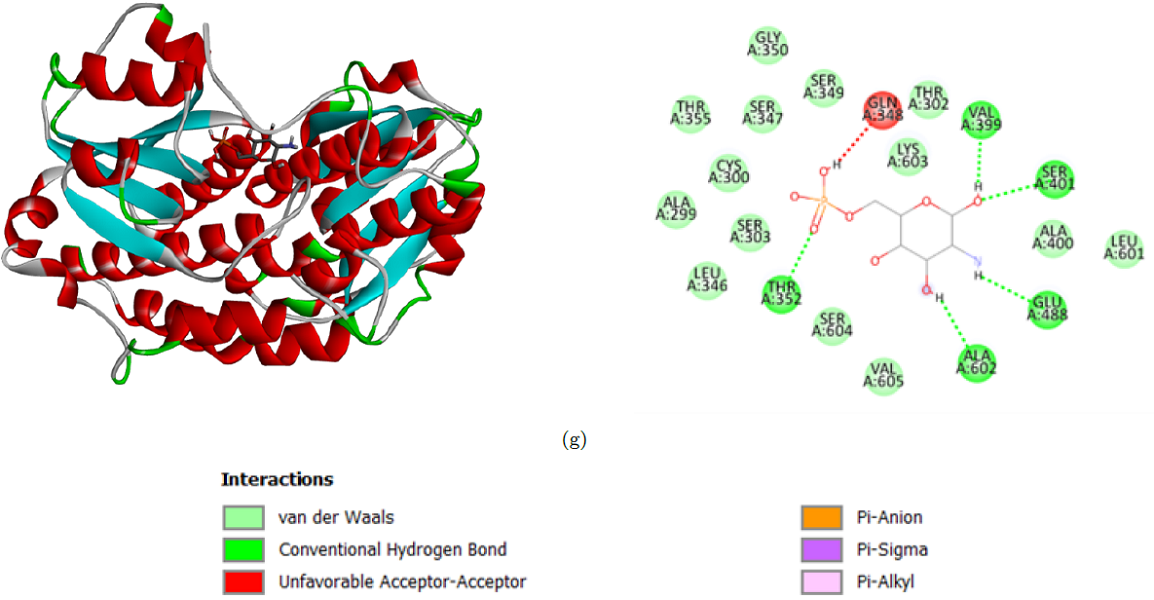
Background: Chalcone derivatives are well-known for their versatile pharmacological properties, particularly their antimicrobial and antioxidant activities. Their simple chemical structure and ease of synthesis make them attractive candidates for drug discovery, especially in combating microbial resistance and oxidative stress-related disorders. Objective: The study aimed to synthesize and characterize a series of new chalcone derivatives and evaluate their antimicrobial and antioxidant activities, alongside molecular docking studies to assess their potential as therapeutic agents. Methods: Six new chalcone derivatives were synthesized via Claisen–Schmidt condensation of two methyl ketones (p-aminoacetophenone and cyclopropyl methyl ketone) with p-substitutedphenyl aldehydes under mild conditions. Structural elucidation was performed using FT-IR, 1H-NMR, 13C-NMR, and GC-MS spectroscopy. Antimicrobial activities were tested against five microbial strains: Staphylococcus aureus, Staphylococcus epidermidis, Escherichia coli, Klebsiella pneumoniae, and Candida albicans, using the agar well-diffusion method. Antioxidant activity was evaluated using the standard DPPH radical scavenging assay. Molecular docking studies were conducted using PyRx software to investigate the binding interactions of the synthesized chalcones with the active site of glucosamine-6-phosphate (GlcN-6-P) synthase, a target enzyme for antimicrobial agents. Results: The synthesized chalcone derivatives were successfully characterized and exhibited varying levels of antimicrobial activity against the tested strains, with some compounds demonstrating significant inhibitory effects. Antioxidant assays revealed promising radical scavenging capabilities for several synthesized chalcones. Docking studies showed favorable binding affinities between the identified compounds and the GlcN-6-P synthase active site, supporting the experimental bioactivity results. Conclusions: This study demonstrates that the newly synthesized chalcone derivatives possess both antimicrobial and antioxidant activities. Their effective interaction with GlcN-6-P synthase suggests potential for further development as lead compounds in antimicrobial drug research.
Downloads
References
A. Rammohan, J. S. Reddy, G. Sravya, C. N. Rao, and G. V. Zyryanov, “Chalcone synthesis, properties and medicinal applications: A review,” Environmental Chemistry Letters, vol. 18, no. 2, pp. 433–458, 2020.
CrossRef | Google Scholar
N. A. A. Elkanzi, H. Hrichi, R. A. Alolayan, W. Derafa, F. M. Zahou, and R. B. Bakr, “Synthesis of chalcones derivatives and their biological activities: A review,” ACS Omega, vol. 7, no. 32, pp. 27769–27786, 2022.
CrossRef | Google Scholar | PubMed
M. A. Shalaby, S. A. Rizk, and A. M. Fahim, “Synthesis, reactions and application of chalcones: a systematic review,” Organic & Biomolecular Chemistry, vol. 21, no. 26, pp. 5317–5346, 2023.
CrossRef | Google Scholar | PubMed
N. K. Ibrahim, “Synthesis and Docking Study of new Heterocyclic derivatives derived from Chalcones and Evaluation of their antimicrobial activity,” Ph.D. dissertation, Mustansiriyah University, 2023.
Google Scholar | Link
I. S. Mahdi, A. M. Abdula, A. M. N. Jassim, and Y. Baqi, “Design, synthesis, antimicrobial properties, and molecular docking of novel Furan-Derived chalcones and their 3,5-Diaryl-∆2-pyrazoline derivatives,” Antibiotics, vol. 13, no. 1, Art no. 21, 2023.
CrossRef | Google Scholar | PubMed
E. N. Okolo, D. I. Ugwu, B. E. Ezema, J. C. Ndefo, F. U. Eze, C. G. Ezema, J. A. Ezugwu, and O. T. Ujam, “New chalcone derivatives as potential antimicrobial and antioxidant agent,” Scientific Reports, vol. 11, no. 1, Art no. 21781, 2021.
CrossRef | Google Scholar | PubMed
O. J. Mohammed, M. F. Radi, A. Abdula, B. Al-Ahdami, W. Rodhan, and H. Sha'aban, “Synthesis of four chalcone derivatives bearing heterocyclic moieties as new Ache inhibitors by docking simulation,” International Journal of Chemical Sciences, vol. 13, no. 1, pp. 157–166, 2015.
Google Scholar
E. Yalçın, S. Sevin, R. Uyar, and F. Ayaz, “Anti-Inflammatory activities of novel chalcone derivatives,” Russian Journal of Bioorganic Chemistry, vol. 50, no. 2, pp. 432–443, 2024.
CrossRef | Google Scholar
F. F. Leite, N. F. de Sousa, B. H. M. de Oliveira, G. D. Duarte, M. D. L. Ferreira, M. T. Scotti, J. M. B. Filho, L. C. Rodrigues, R. O. de Moura, F. J. B. Mendonça-Junior, and L. Scotti, “Anticancer activity of chalcones and its derivatives: Review and In silico studies,” Molecules, vol. 28, no. 10, Art no. 4009, 2023.
CrossRef | Google Scholar | PubMed
K. Mezgebe, Y. Melaku, and E. Mulugeta, “Synthesis and pharmacological activities of chalcone and its derivatives bearing N-Heterocyclic scaffolds: A review,” ACS Omega, vol. 8, no. 22, pp. 19194–19211, 2023.
CrossRef | Google Scholar | PubMed
J. Sharma and R. Kaushal, “Nitrogen containing heterocyclic chalcone hybrids and their biological potential (A review),” Russian Journal of General Chemistry, vol. 94, no. 7, pp. 1794–1814, 2024.
CrossRef | Google Scholar
K. W. K. Tang, B. C. Millar, and J. E. Moore, “Antimicrobial resistance (AMR),” British Journal of Biomedical Science, vol. 80, Art no. 11387, Jun. 2023.
CrossRef | Google Scholar | PubMed
B. D. Gelalcha and O. Kerro Dego, “Extended-Spectrum beta-lactamases producing enterobacteriaceae in the USA dairy cattle farms and implications for public health,” Antibiotics, vol. 11, no. 10, Art no. 1313, 2022.
CrossRef | Google Scholar | PubMed
S. Perestrelo, A. Amaro, M. S. M. Brouwer, L. Clemente, A. S. Ribeiro Duarte, A. Kaesbohrer, R. Karpíšková, V. Lopez-Chavarrias, D. Morris, D. Prendergast, et al., “Building an international one health strain level database to characterise the epidemiology of AMR threats: ESBL-AmpC producing E. coli as an example—challenges and perspectives,” Antibiotics, vol. 12, no. 3, Art no. 552, 2023.
CrossRef | Google Scholar | PubMed
A. Ananthakrishnan, C. Painter, and Y. Teerawattananon, “A protocol for a systematic literature review of economic evaluation studies of interventions to address antimicrobial resistance,” Systematic Reviews, vol. 10, no. 1, Art no. 242, 2021.
CrossRef | Google Scholar | PubMed
Z. Breijyeh and R. Karaman, “Design and synthesis of novel antimicrobial agents,” Antibiotics, vol. 12, no. 3, Art no. 628, 2023.
CrossRef | Google Scholar | PubMed
M. Lomazzi, M. Moore, A. Johnson, M. Balasegaram, and B. Borisch, “Antimicrobial resistance—moving forward?” BMC Public Health, vol. 19, no. 1, Art no. 858, 2019.
CrossRef | Google Scholar | PubMed
Y. S. Anteneh, Q. Yang, M. H. Brown, and C. M. M. Franco, “Antimicrobial activities of marine sponge-associated bacteria,” Microorganisms, vol. 9, no. 1, Art no. 171, 2021.
CrossRef | Google Scholar | PubMed
G. Rajendran, D. Bhanu, B. Aruchamy, P. Ramani, N. Pandurangan, K. N. Bobba, E. J. Oh, H. Y. Chung, P. Gangadaran, and B.-C. Ahn, “Chalcone: A promising bioactive scaffold in medicinal chemistry,” Pharmaceuticals, vol. 15, no. 10, Art no. 1250, 2022.
CrossRef | Google Scholar | PubMed
M. I. Sultan, A. M. Abdula, R. I. Faeq, and M. F. Radi, “Synthesis, characterization, and antimicrobial evaluation of new pyrazolines incorporating imine moiety,” Journal of Physics: Conference Series, vol. 1853, no. 1, Art no. 012043, 2021.
CrossRef | Google Scholar
S. A. Hamza, R. S. Mohammed, M. F. Al Marjani, and M. M. Bekhit, “Antibiotic susceptibility profile of carbapenem-resistant Klebsiella pneumoniae isolates after exposure to non-thermal plasma,” Al-Mustansiriyah Journal of Science, vol. 36, no. 1, pp. 14–21, 2025.
CrossRef | Google Scholar
K. A. Lazim and H. M. Moghaddam, “Green synthesis of nickel nanoparticles using Lawsonia inermis extract and evaluation of their effectiveness against Staphylococcus aureus,” Al-Mustansiriyah Journal of Science, vol. 36, no. 1, pp. 84–91, 2025.
CrossRef | Google Scholar
R. S. Najim, M. H. Risan, and D. N. Al-Ugaili, “Antimicrobial efficacy of quercetin against biofilm production by Staphylococcus aureus,” Al-Mustansiriyah Journal of Science, vol. 35, no. 3, pp. 74–80, 2024.
CrossRef | Google Scholar
M. Cuendet, K. Hostettmann, O. Potterat, and W. Dyatmiko, “Iridoid glucosides with free radical scavenging properties from Fagraea blumei,” Helvetica Chimica Acta, vol. 80, no. 4, pp. 1144–1152, 1997.
CrossRef | Google Scholar
I. A. Elhaty and S. A. Zeyoudi, “A comparative study of the phenolic and flavonoids contents, and antioxidant activity of Ziziphus mauritiana's leaves, ripe and unripe fruit extracts from UAE,” Chemistry & Chemical Technology, vol. 18, no. 3, pp. 363–371, 2024.
CrossRef | Google Scholar
J. S. Shia, R. I. H. Al-Bayati, A. M. Abdula, and K. Y. Saour, “Docking study of some N-[4-(4-arylidene)-2-(4-substituted-phenyl)-5-oxo-4,5-dihydro-imidazol-1-yl] benzenesulfonamide derivatives against glucosamine-6-phosphate synthase,” International Journal of Chemical Sciences, vol. 13, no. 4, pp. 1982–1990, 2015.
Google Scholar | Link
S. A. A. Hussein, A. Kubba, and A. M. Abdula, “Docking study of some new 2,5-Disubstituted-1,3,4-thiadiazole derivatives against glucosamine-6-phosphate synthase,” International Journal of Applied Chemistry, vol. 12, no. 1, pp. 1–10, 2016.
Google Scholar| Link
Downloads
Key Dates
Received
Revised
Accepted
Published
Data Availability Statement
Data are available from the authors upon reasonable request.
Issue
Section
License
Copyright (c) 2025 Jameel A. M. Al-Duraye , Ahmed Mutanabbi Abdula, Younis Baqi

This work is licensed under a Creative Commons Attribution 4.0 International License.
(Starting May 5, 2024) Authors retain copyright and grant the journal right of first publication with the work simultaneously licensed under a Creative Commons Attribution (CC-BY) 4.0 License that allows others to share the work with an acknowledgement of the work’s authorship and initial publication in this journal.
How to Cite